




Vademecum on the use of fluorinated greenhouse gases in agricultural machinery
...
Circular Agriculture in Action
A CEMA contribution to sustainable agriculture
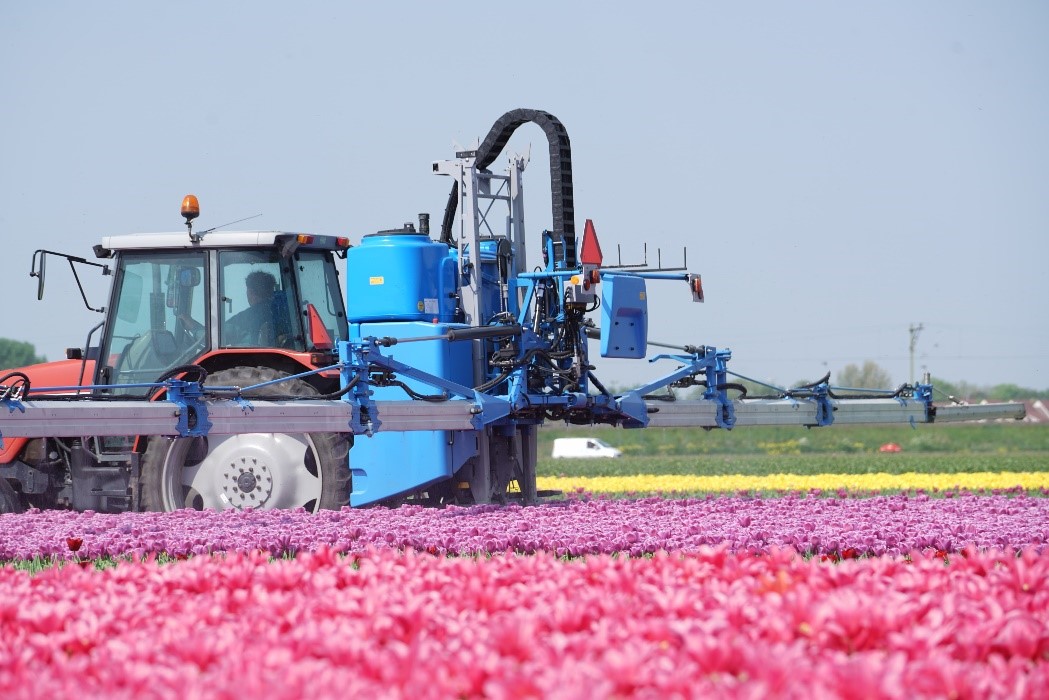
Accelerating Innovative practices for Spraying Equipment, Training and Advising in European agriculture through the mobilization of Agricultural Knowledge and Innovation Systems
Start date: 1 May 2018
End date: 30 April 2021
In a nutshell:
INNOSETA is an European Union’s Horizon 2020 project aiming at establishing a self-sustaining and innovative thematic network on crop protection and the sustainable use of plant protection products (spray equipment, training and advice) to close the gap between new developments resulting from the numerous projects European research, and the use and exploitation of all this by the farmer. The project is coordinated by Universitat Politècnica de Catalunya (Spain), with an international and representative consortium of 15 partners, coming from 8 EU countries, including the European Crop Protection Association (ECPA), COPA-COGECA and CEMA, with total budget of € 1 998 562,50.
The project intends to:
The project already developed its INNOSETA Platform, a freely accessible repository of innovative spraying technology, training material, projects and papers tailored to the needs of the spraying community. More info on the platform can be found HERE.
CEMA’s role:
INNOSETA will be an important opportunity for CEMA to continue working with ECPA and COPA-COGECA boosting the success of STEP-Water, the webtool developed jointly by CEMA and ECPA to help farmers and contractors to make a well thought through purchasing decision for a new sprayer - or retrofit old sprayers in terms of water protection.
Additionally, CEMA is supporting the creation of the innovative SETA solutions inventory (INNOSETA platform) by identifying and screening industry products/applications related to SETA that are already on the market.
In the frame of Dissemination and Communication activities, CEMA will:
Check more on this unique project and follow INNOSETA on social networks:

This project has received funding from the European Union’s Horizon 2020 research and innovation programme under grant agreement no. 773864
Internet of Food and Farm 2020
Start date: 1 January 2017
End date: 31 December 2020
In a nutshell:
The IoF2020 is an European Union’s Horizon 2020 project is dedicated to accelerate adoption of IoT for securing sufficient, safe and healthy food and to strengthen competitiveness of farming and food chains in Europe. The projects brings together 73 partners, including CEMA and individual manufacturers, such as 365FarmNet, CNH Industrial, Grimme, Kverneland. The coordination of the project is in hands of Wageningen University with the overall budget of € 34 234 990,42. The heart of the project is formed by 19 use cases grouped in 5 trials with end users from the Arable, Dairy, Fruits, Vegetables and Meat verticals and IoT integrators that will demonstrate the business case of innovative IoT solutions for a large number of application areas involving different stakeholders.
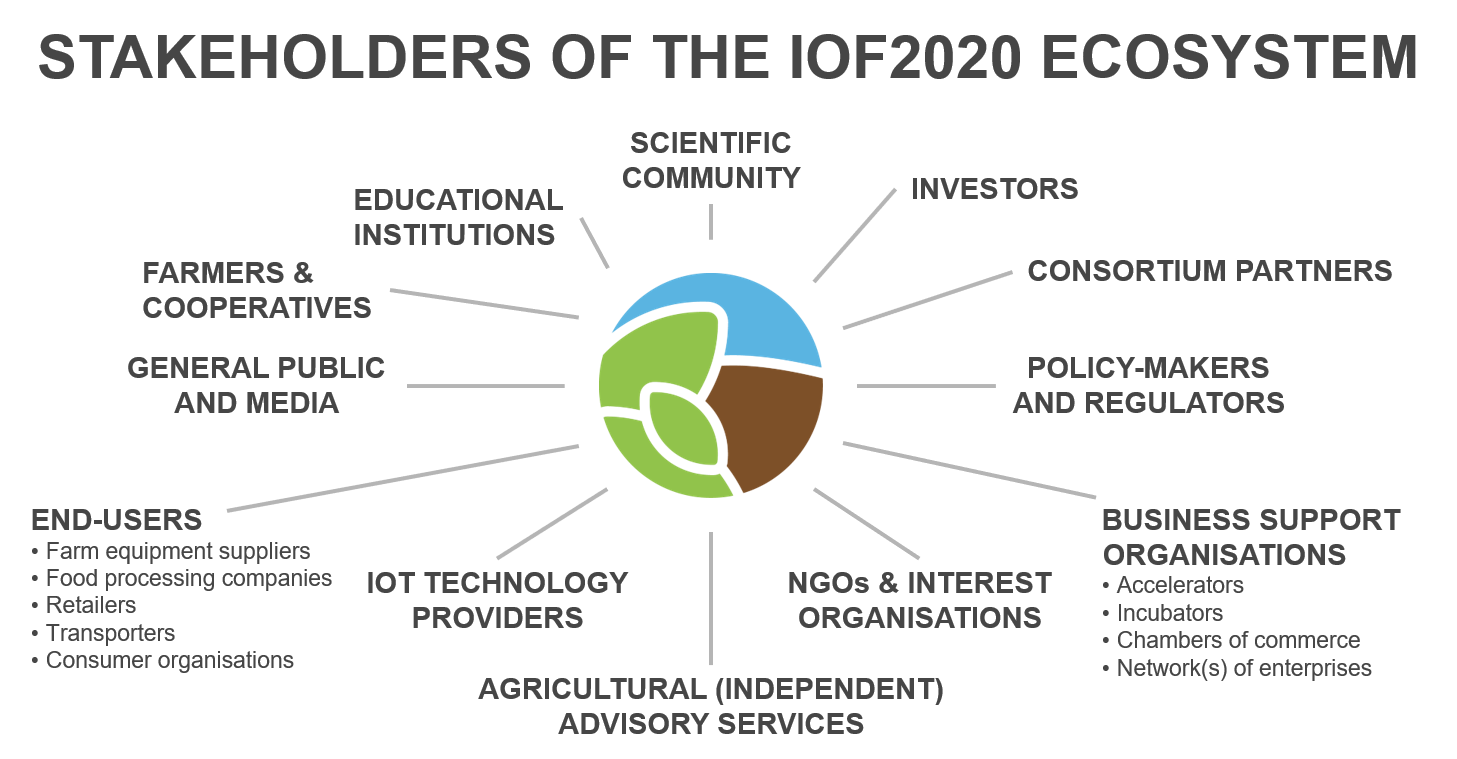
The project intends to:
CEMA’s role:
CEMA, in its role of European Association, is member of the Pilot Implementation Board (PIB) which allows a close follow-up of future IoF2020 activities.
In particular, the PIB closely follows the procedures for the planning, launching and managing of the Open Call. The main objective of the Open Call is to increase the scale and impact of the IoF2020 initiative: for doing so, the Open Call will allow new use case teams with highly impactful and market-ready IoT innovations to join the IoF2020 team. All the IoF2020 Use cases are also available on the IoT Catalogue platform.
Check more on this unique project and follow IoF2020 on social networks:
This project has received funding from the European Union’s Horizon 2020 research and innovation programme under grant agreement no. 731884
Sustainable techno-economic solutions for the agricultural value chain
Start date: 1 June 2016
End date: 31 May 2019
In a nutshell:
AgroCycle is a ca. €8 million (ca. €7 million from the European Commission, ca. €1 million from the Government of The People’s Republic of China) Horizon 2020 research and innovation project addressing the recycling and valorisation of waste from the agri-food sector. Led by the School of Biosystems and Food Engineering at University College Dublin, the consortium of 26 partners comprises partners from 8 EU countries, two partners from mainland China, and one from Hong Kong. The project takes a holistic approach to understanding and addressing how to make best use of the full range of waste streams associated with the agri-food industry. It will address a wide range of valorisation pathways, including: bio-fuels, high value-added biopolymers, energy and microbial fuel cells. It will deliver the AgroCycle Protocol, a blueprint for achieving sustainable agri-food waste valorisation.
Project objectives:
AgroCycle aims at developing and demonstrating a protocol to deliver a 10% increase in agricultural waste valorisation by 2020 and contribute to the European policy target of reducing food waste by 50% in 2030 as well as to enhancing greater sustainability in China in this field.
The project’s main objectives are to achieve:
Consortium:
The AgroCycle consortium is a large (25) multi-national group (including China) comprising the necessary and relevant multi-actors (i.e. researchers; companies in the technical, manufacturing, advisory, retail sectors (Large and SMEs); lead users; end users; and trade/producer associations) coordinated by the School of Biosystems and Food Engineering at University College Dublin.
CEMA role & contributions:
CEMA has been a key partner to promote the involvement of the private sector – agricultural machinery industry – into the AgroCycle project, thus:
Check more on this unique project:
To advance agricultural machinery and solutions for sustainable farming, CEMA focuses on a number of priorities. Agriculture 4.0 and Smart Farm Machines are drivers for efficiency and competitiveness in modern sustainable farming. EU Regulations must however be appropriate, harmonizing the rules without burdening the sector with excessive administrative and technical requirements. Through the participation to selected EU projects and initiatives, our industry contributes to innovation in the agri-food chain. The European farm equipment industry is a leading technology provider for farmers worldwide and is part of the solution to feed a growing world population.

Greater sustainability and environmental protection

Economic benefits

Higher productivity
The study highlights the recent trends during CAP negotiations, pointing to changes in CAP strategic plans ...
DOWNLOAD